

Khia Pham and Run the Burbs
Looking for a refreshing and nuanced portrayal of sapphic youth? Watch a Canadian sitcom about suburban life.

I never expected to see myself represented in mainstream media until I read the open casting call for CBC original comedy Run The Burbs in 2021. I was so excited about having a sapphic Asian character as a lead that I promptly messaged one of the show’s creators to thank him for including her.
The premise of Run The Burbs (which ran from 2022–24 and is available to watch for free on CBC Gem) surrounds the Phams, “a young, bold Vietnamese and South Asian Canadian family taking a different approach to living life to the fullest, while changing the way we think about contemporary family values and life in the burbs.”1

As conversations about lesbian and sapphic representation in media continue to evolve, Run The Burbs presents a positive case study. The series challenges long-standing tropes about suburban and queer life through the Pham’s teenage daughter, Khia (played by Zoriah Wong). In the show, Khia’s queerness is central to her identity, but she is not defined by it as her plots revolve around her being a teenager growing up and figuring things out.
Television in particular has long been a powerful medium for reflecting and shaping cultural attitudes toward various social identities. From coded characters of early television to more nuanced portrayals in contemporary media, the landscape of queer representation has evolved significantly. However, persistent tropes and stereotypes continue to influence the portrayal of queer characters, particularly lesbian, bisexual, or sapphic individuals.
Subverting Tropes about Queer Youth
In Barbara Jane Brickman’s book, Suffering Sappho!: Lesbian Camp in American Popular Culture, she explores how lesbian characters were often relegated to stereotypical roles in early television, such as the spinster or comedic sidekick. Brickman writes that by “evading a defining relationship to a man, whether father or husband, within the nuclear family and, thereby, freer to define herself, the spinster disturbs as a liminal figure, or third term.” Historically, lesbians in television frighten heteronormative society, and this campy portrayal of queerness perpetuates harmful stereotypes and limits the representation of lesbians and sapphics in media.
While there have been strides in representation since 1950s television, many of these tropes remain in rhetoric surrounding queer characters. Because Run The Burbs is a sitcom whose queer character is young, darker tropes such as ‘Bury Your Gays’ are unlikely to appear. But the show actively avoids using tropes like the ‘Gay Best Friend’ or the ‘Closeted Jock’ that can be found in other shows with queer youth, such as Glee, or even the overarching trope of a troubled teen.
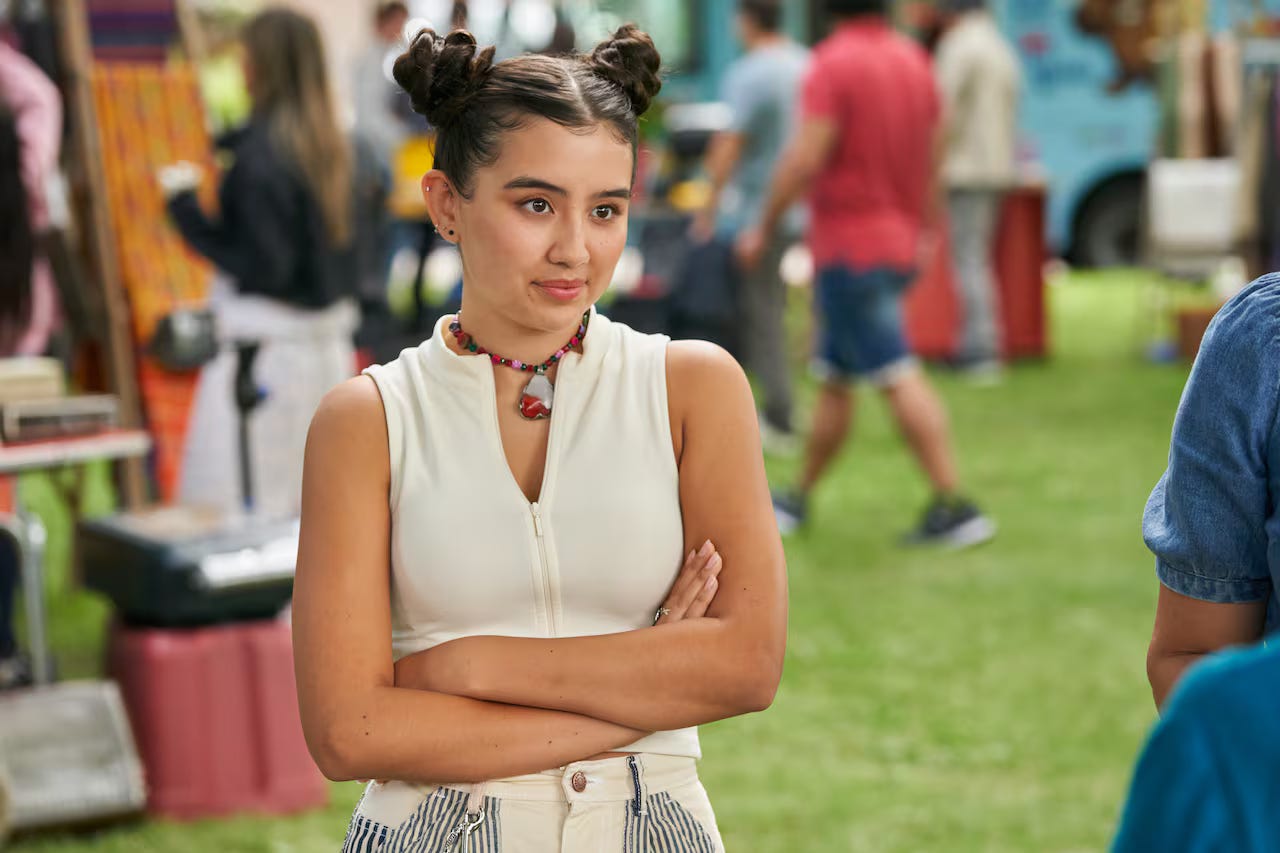
The character of Khia Pham stands out as a sweet and easygoing teenager — in fact, one plot centres on her mum Camille trying different tricks to get Khia to rebel more. But she also stands out for her unapologetic queerness. Unlike many queer and sapphic characters in teen-centric shows, Khia’s storyline doesn’t revolve around her struggling with her identity or coming out to her family and friends. This departure from the coming-out narrative is refreshing, as it subverts the trope that queer characters must endure hardship and adversity as a rite of passage. Instead, Khia is embraced by her family and community for who she is, reflecting a more accepting and inclusive portrayal of queer youth. When I first started watching Run The Burbs, I was pleasantly surprised that her storyline didn’t focus only on queer youth struggles.
Run The Burbs additionally navigates queer identity alongside cultural heritage, for Khia and their other sapphic characters. Khia’s Vietnamese and South Asian families are very supportive of her queerness, further pushing back against a common trope of conservative Asian parents.
In her chapter “Why Suzie Wong Is Not a Lesbian,” JeeYeun Lee examines how Asian women are thrust into heteronormative roles because of Orientalism and the construction of the East as hyperfeminine. This stereotype conflicts with the image of lesbians as butch, meaning that “a femme woman of colour...will probably not be recognized as a lesbian, first because she is not white and then because she is not butch.” Lesbians and sapphics in Run The Burbs are femme, butch, Asian, Black, and many other identities. This intersectional approach to representation is crucial, as it acknowledges the complexities of identity and the diverse experiences within marginalized communities.
Queer Kinship in the Burbs
Run The Burbs also explores the concept of queer kinship, highlighting the importance of chosen family within the LGBTQ+ community. Khia finds a sense of belonging not only within her own family but also among her friends and neighbours. She works part-time at Bubble Bae, the local bubble tea shop run by a fellow queer Asian woman, Cathy.
In season 3, episode 10, “Phirst Love,” Khia is promoted to shift manager so that Cathy can spend more time with her girlfriend. While Cathy just wants Khia to open and close the shop, this promotion excites Khia, who starts imagining fun events that Bubble Bae can hold, such as a themed drink day.
Cathy: (reading Khia’s post) “Come try the new Lavender Menace Bubble Tea. #BubbleBae. #AllDay.”
Khia: [It’s] to promote the cafe having a one-day-only secret drink. It’s inspired by the Lavender Menace, a group of 1970s lesbian activists who–
Cathy: I know who the Lavender Menace are.
The shop becomes more lively throughout the episode, as queer youth arrive to try a new one-day-only drink promoted on social media. This storyline supports Brockenborough and Boatwright’s assertion that “gays and lesbians often establish intentional, family-like networks with others who support them in overcoming the marginalization they experience because of their sexual orientations.”
Building on these insights, Mary Robertson explores how queer individuals navigate media landscapes to find authentic representation and community. Bubble Bae becomes crowded and becomes a third space for queer teens in their suburb after Khia promotes it as a safe space for queer teens on social media.
Robertson: “The internet and its access to global queer community and alternative culture is probably the most significant factor in the shifting norms around same-sex desire and LGBTQ culture for young people of this generation. Whereas previous LGBTQ-identified folks had to move to gay meccas like San Francisco, Chicago, and New York to find community, the internet provides instant communities where queer culture can proliferate.”
Although Robertson focuses primarily on online communities, without the use of social media or the internet, the bubble tea shop would not be able to garner the same reach to queer teens in the area as Khia tells Cathy: “A lot of the world is losing safe spaces for queers, did you ever consider how badass it is just to give them a place to come and eat?”
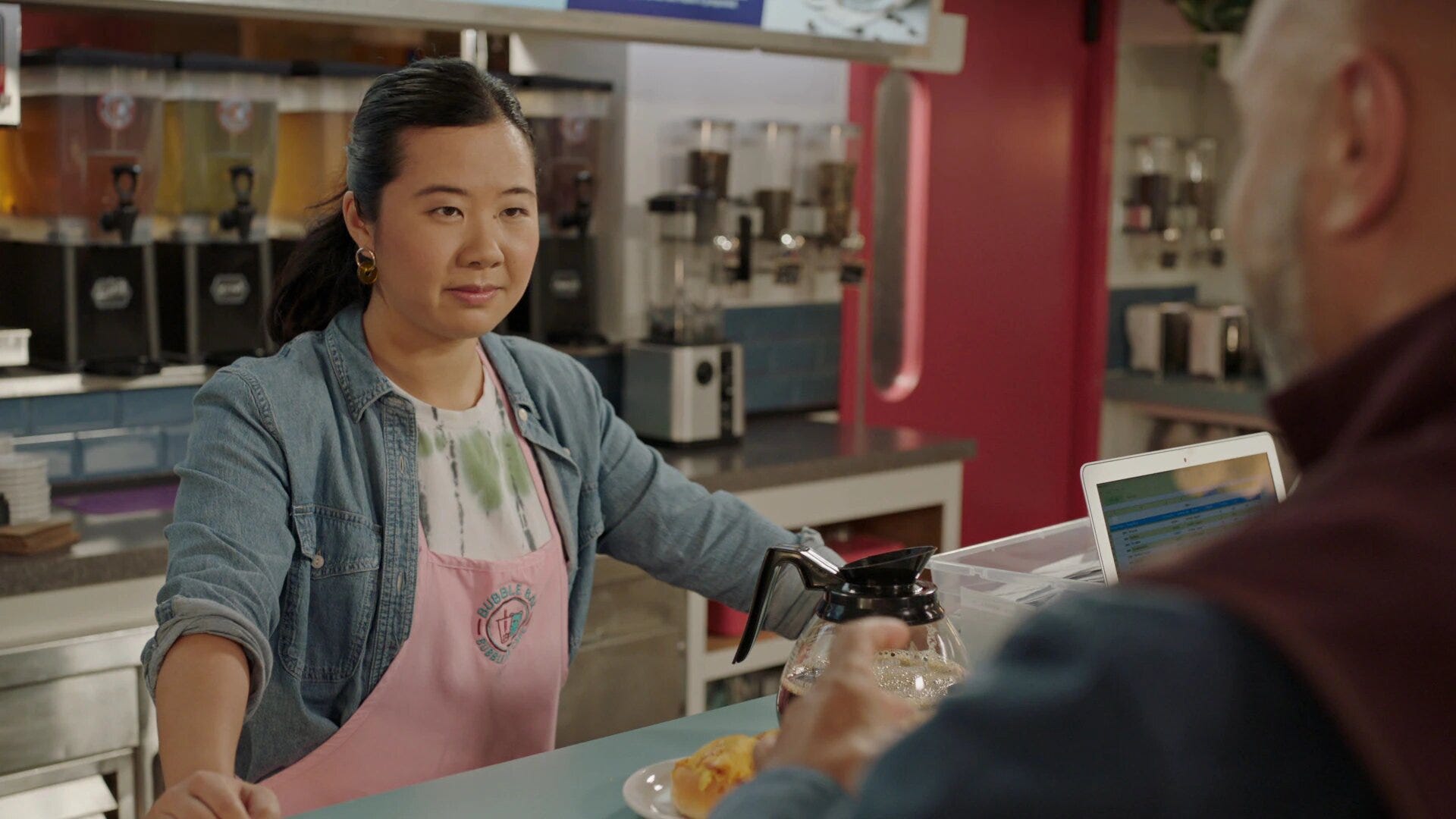
Khia’s character further challenges the notion that queer identities are incompatible with suburban life. The show centres on family life and community in the suburbs, an environment that is often portrayed or understood as homophobic and a bad place for queer people to live in, compared to big cities. While suburban or city life might have its respective problems, queer communities have long existed in suburban spaces. Run the Burbs’ portrayal of queer kinship through Khia demonstrates that queer and sapphic individuals exist and can thrive in any environment.
Conclusion
Run The Burbs offers a refreshing and nuanced portrayal of sapphic youth through the character of Khia Pham. She emerges as a central figure whose queerness is integral to her character but not the sole focus of her storyline.
Run The Burbs challenges common tropes in media about queer youth by not prioritizing storylines of struggling with identity and coming out narratives. Rather, Khia’s plots focus on her first relationships and breakups, the intersection of her artistic interests and politics, as well as family and friend connections.
Through an intersectional lens, the show further emphasizes the importance of queer kinship within the LGBTQ+ community as depicted in the series. Run The Burbs contributes an authentic, diverse, and positively heartwarming depiction of sapphic teens and individuals in television.
References
Brickman, B. J. (2024). Spinsters, Career Gals, and Butch Comedy in 1950s Television. Suffering Sappho!: Lesbian Camp in American Popular Culture (First edition, pp. 90–119). Rutgers University Press. https://doi.org/10.36019/9781978828292.
Brockenbrough, E., & Boatwright, T. (2013). In the MAC: Creating safe spaces for transgender youth of colour. In K. M. Jocson (Ed.), Cultural transformations: Youth and pedagogies of possibility (pp. 165–182). Harvard University Press.
Lee, J. 1996. Why Suzie Wong Is Not a Lesbian: Asian and Asian American Lesbian and Bisexual Women and Femme/Butch/Gender Identities. In B. Beemyn and M. Eliason (Eds.), Queer Studies: A Lesbian, Gay, Bisexual, and Transgender Anthology (pp. 115–132). New York: New York University Press.
Phung, A., & Townend, S. (Creators). (2022, January 5). Run The Burbs [Television series]. In Pier 21 Films (Production). Hamilton, Ontario: CBC. https://gem.cbc.ca/run-the-burbs.
Robertson, M. (2020). Google Knows Everything: Finding Queer Media. In Growing Up Queer (Vol. 3, pp. 91–116). New York University Press. https://doi.org/10.18574/nyu/9781479879601.003.0005.
If you’ve ever watched Kim’s Convenience (which can also spark fascinating conversations about sapphic Asian representation), you’ll spot familiar faces in this show.
Thanks so much for such a great review!